Shri Mayureshwar Temple, Morgaon
Details about Shri Mayureshwar Temple, Morgaon
ASHTAVINAYAK TEMPLES DETAILS & IMPORTANCE
Pravas Sukhacha
3/8/20262 min read
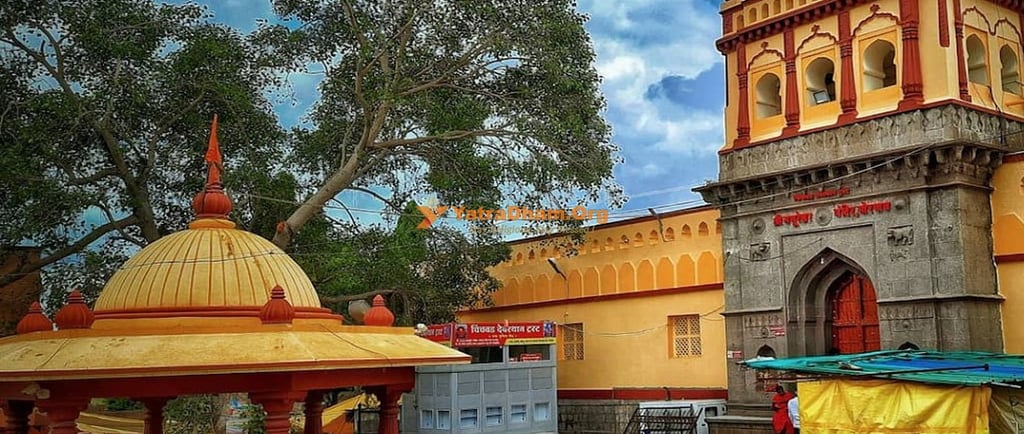
If you are planning an Ashtavinayak Yatra, your journey truly begins at Morgaon. Among the eight sacred temples of Lord Ganesha in Maharashtra, Morgaon holds a special spiritual importance. Devotees believe that the pilgrimage must start here and conclude here as well, making it the symbolic center of the Ashtavinayak tradition.
The presiding deity of the temple is worshipped as Mayureshwar, a form of Ganesha associated with the legendary defeat of the demon Sindhu. Because of this story, Morgaon is not just another temple on the pilgrimage route—it represents the triumph of divine wisdom over ego and chaos.
The Legend of the Peacock Warrior
According to ancient traditions connected with the Mudgala Purana, the story begins in the Treta Yuga.
A powerful king named Chakrapani and his wife Ugra performed severe penance to the Surya. Pleased with their devotion, the Sun God blessed them with a son named Sindhu.
Along with the blessing came a powerful boon. Surya gave Sindhu a bowl of Amrit, the nectar of immortality. Sindhu swallowed the bowl, and as long as the nectar remained within him, he could not be defeated.
Over time, the power of this boon made Sindhu arrogant. He conquered the three worlds and imprisoned many of the gods. To restore balance to the universe, Lord Ganesha took birth as the son of Shiva and Parvati.
When Ganesha grew up, he prepared to confront Sindhu. For this battle he chose an unusual vehicle—a peacock. Riding the bird into combat, he fought Sindhu’s massive army. After a fierce battle, Ganesha discovered the secret of the demon’s immortality. With his divine axe, the Parashu, he struck Sindhu and destroyed the hidden source of the nectar. Once the Amrit was gone, the demon fell and the imprisoned gods were freed.
Because Ganesha rode a peacock during this victory, he came to be worshipped here as Mayureshwar—the Lord of the Peacock.
The Unique Architecture of the Temple
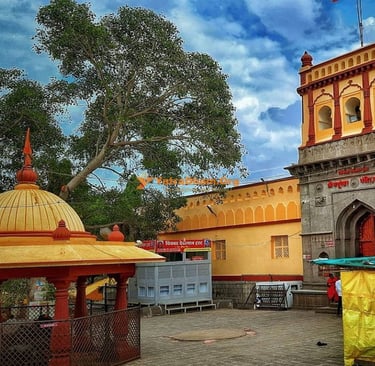
If you look closely at the temple at Mayureshwar Ganpati Temple, it does not resemble the typical style of many Hindu temples.
The structure is surrounded by thick stone walls and has four tall minaret-like towers at its corners, giving it a fortress-like appearance. Some local traditions say that this design helped protect the temple during periods of political conflict in medieval India.
Another unusual feature inside the temple complex is the presence of a stone Nandi. Normally, the sacred bull Nandi is associated with temples of Lord Shiva. At Morgaon, however, the bull faces Lord Ganesha.
According to local legend, the statue was once being transported to a nearby temple dedicated to Shiva. When the cart reached this spot, it suddenly stopped moving and could not be pulled any further. Devotees interpreted this as a divine sign, and the Nandi was installed there permanently—symbolically reminding pilgrims of the deep connection between Shiva and Ganesha.
The Spiritual Importance for Pilgrims
Morgaon holds a unique place in the Ashtavinayak pilgrimage tradition.
According to the traditions associated with the Mudgala Purana, the pilgrimage should begin at Morgaon, continue to the other seven temples, and finally return here to complete the sacred journey.
The idol worshipped here is believed to be Swayambhu, meaning self-manifested rather than crafted by human hands. The idol is covered with Shendur (vermilion), a traditional form of decoration for Ganesha idols.
Over the centuries, many saints and devotees have visited this temple. One of the most famous among them was Morya Gosavi, whose deep devotion to Lord Ganesha helped spread the spiritual importance of this sacred place.
For pilgrims walking the path of the Ashtavinayak Yatra, Morgaon represents both the beginning and the completion of the journey—a reminder that every spiritual path ultimately returns to its source.
Contact
Reach out for bookings or any questions
Phone
+91 90163 49133
© 2026. All rights reserved
A Collaborative Initiative By Pravas Sukhacha™ & Royal Holidayj